
A cracked screen or a phone that won’t turn on doesn’t mean the device is worthless. It means the value has shifted from “working handset” to “recoverable parts and materials” and that shift changes how, where, and to whom you should sell it.
Direct answer: Selling broken phones without losing money, get quotes from several specialist buyers, disclose the fault honestly, wipe and back up the device first, and compare offers based on parts value rather than working-condition pricing. Avoid single, unverified local offers.
Did You Know?
According to the UN’s Global E-waste Monitor 2024, the world generated 62 million tonnes of e-waste in 2022, and only about 22% of it was formally collected and recycled. Millions of those discarded devices were phones that still had resale or component value money left on the table simply because owners didn’t know where to sell them properly.
Key Takeaways
- Broken doesn’t mean worthless value shifts to parts, components, and repairability.
- Get multiple quotes; a single offer is rarely the best one.
- Disclose faults honestly and remove accounts before selling.
- Compare repair cost against resale gain before choosing refurbishment over a straight sale.
- Businesses managing several devices benefit from a structured, consultancy-led approach rather than selling piecemeal.
What Actually Affects the Value of a Broken Phone
Buyers don’t price a damaged phone the way they price a working one. Instead, they look at what can be salvaged or repaired cost-effectively. The main factors are:
- Brand and model demand – Apple devices tend to hold value even when broken, because their screens, batteries, and logic boards are in constant demand for repairs.
- Type of fault – A cracked screen is far cheaper to price around than water damage or a dead motherboard, since screens are a known, replaceable cost.
- Storage capacity and specification – Higher-spec models retain more component value even in poor condition.
- Completeness – A phone with its original battery, back glass, and camera modules intact is worth more than one that’s been cannibalised for parts.
- Age and part scarcity – Older or discontinued models can sometimes fetch surprisingly good prices if parts are hard to source elsewhere.
Understanding these factors is the first step before you try to sell broken phones for a fair price, rather than accepting whatever number a single buyer throws out.
Common Reasons Sellers Receive Low Offers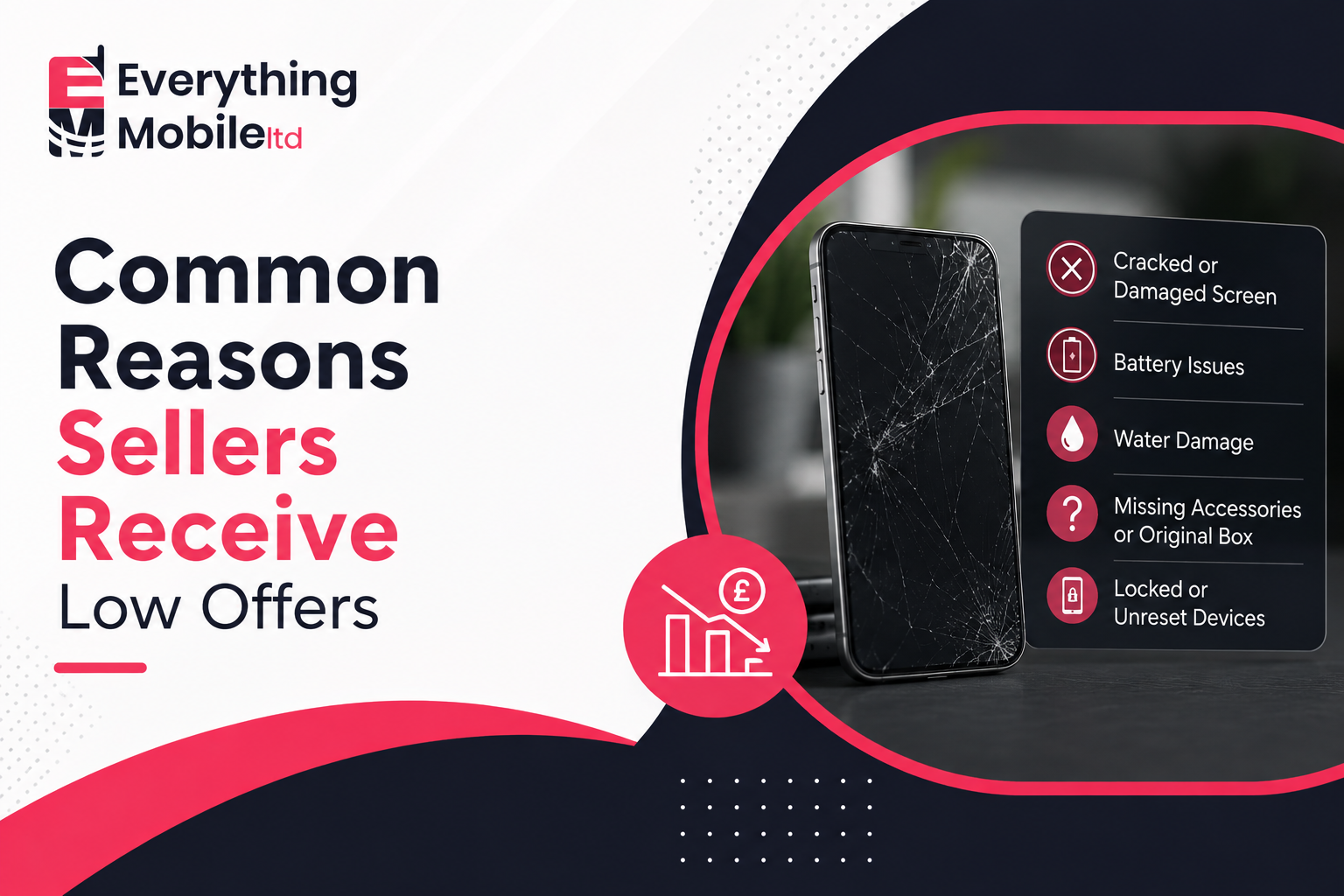
Most people don’t lose money because their phone is genuinely worthless they lose money because of avoidable mistakes during the sale. The table below breaks down the most frequent culprits.
| Reason for a Low Offer | Why It Happens |
| Selling to the first buyer approached | No price comparison means no benchmark for a fair offer |
| Undisclosed or hidden faults | Buyers deduct extra for “surprise” damage found on inspection |
| Not resetting or removing accounts (iCloud/Google) | Locked phones are treated as scrap value only |
| Missing accessories, box, or charger | Bundled items add small but real value |
| Selling through general marketplaces | Casual buyers can’t assess component value, so they lowball |
| Ignoring data-wipe and warranty checks | Buyers factor in the risk and admin cost of unresolved accounts |
If you can sell your broken phone through a buyer who grades devices transparently, most of these deductions disappear.
How to Prepare a Damaged Device Before Selling
A little preparation goes a long way toward getting closer to the phone’s real value:
- Back up your data – Even a non-powering phone can sometimes be data-recovered first via professional tools.
- Sign out of accounts – Remove iCloud, Google, and any MDM (mobile device management) profiles so the phone isn’t locked.
- Document the damage – Take clear photos of the screen, back, and any visible faults; this speeds up quote accuracy and avoids disputes.
- Gather accessories – Original box, charger, or SIM tray can add a small premium.
- Get more than one quote – Compare specialist buyback services against general resale platforms before committing.
Businesses replacing multiple handsets should apply the same checklist across every device before requesting a bulk quote it keeps the valuation consistent and avoids under-selling stock.
When Selling Beats Refurbishment
Refurbishment isn’t always the smarter financial move, especially for individuals or businesses without repair infrastructure. Here’s how the two options compare:
| Factor | Selling As-Is | Refurbishing First |
| Upfront cost | None | Repair parts and labour required |
| Time to cash | Fast (days) | Slower (repair turnaround) |
| Risk | Low buyer assesses fault | Repair may not add resale value if parts are pricey |
| Best for | Single or occasional sellers | High-value models where repair cost is low relative to resale gain |
| Skill needed | None | Technical knowledge or a trusted repairer |
As a general rule: if the repair cost is more than 30–40% of the phone’s working resale value, selling it broken is usually the better outcome. This is especially true for water-damaged devices, phones with cracked logic boards, or older models where parts are hard to source.
If you’re weighing this decision for a single device, it helps to first check where to sell broken phones that specialise in fault-based pricing, so you have a genuine benchmark before deciding whether repair is worth it.
Why Professional Consultancy Makes a Difference
 For individuals, this decision is usually straightforward. But for businesses, IT managers, and procurement teams handling surplus or end-of-life devices, the stakes are higher multiple handsets, data security requirements, and sustainability reporting all come into play.
A mobile asset consultancy can help by:
- Grading multiple devices consistently and providing commercial valuation reports
- Advising whether a batch should be resold, recycled, or partially refurbished
- Ensuring data wiping and compliance requirements are met before resale
- Structuring ongoing device lifecycle strategies, rather than one-off disposals
This is particularly relevant for organisations managing recurring device turnover, where ad hoc decisions on each broken phone can quietly cost far more than a structured strategy would. Businesses in this position often benefit from working with a specialist who can sell old broken phones or manage recycling on their behalf, rather than handling each device individually.
Get an Honest Quote on Your Broken Phone
Whether you’re clearing out a single drawer of old handsets or managing device turnover across a business, the same principle applies: know what you’re actually holding before you sell it. A quick comparison of offers, honest disclosure of faults, and for larger volumes a conversation with a specialist consultancy are usually the difference between losing money on a broken phone and getting close to its real worth. Ready to find out what your devices are actually worth? Contact us today and get an honest, fault-by-fault quote no obligation, no lowball guesswork.
Frequently Asked Questions
1. Can I sell a phone that won’t turn on at all?
Yes. Buyers who specialise in damaged devices assess these for parts value screen, battery, camera modules, and chassis components can all still be worth something even if the phone is completely dead.
2. Is it better to sell a broken phone or trade it in at a retailer?
It depends on the fault. Retail trade-in schemes often apply steep, generic deductions for any damage, while specialist buyers price based on the actual condition, which can result in a fairer offer.
3. How do I know if I’m getting a fair price for a faulty phone?
Compare at least two or three quotes from different buyers before accepting one. If offers vary wildly, ask each buyer what specifically is affecting their valuation.
4. Does water damage always mean the phone is worthless?
Not necessarily. Some water-damaged phones can still be assessed for internal components, though the offer will usually be lower than for a screen-only fault.
5. What should businesses do with multiple broken employee phones?
Rather than selling each device separately, it’s usually more efficient to get a bulk valuation from a consultancy that can grade, report, and recommend the best resale or recycling route for the whole batch.