

The best phone supplier in UK businesses can rely on is one that combines competitive bulk pricing, consistent stock availability, graded device quality, clear warranty terms, and a genuine sustainability programme. Rather than picking the cheapest quote, businesses should evaluate suppliers on procurement support, scalability, and after-sales reliability to protect long-term device strategy.
Did you know? Material Focus, a UK e-waste campaign group, estimates that more than 880 million unused electrical items including mobile phones are currently sitting unused in UK homes rather than being reused or recycled . For businesses, this points to a real opportunity: retired company devices that are traded in or refurbished avoid adding to that stockpile, while recovering value that would otherwise sit idle.
A supplier with an established mobile phone recycling programme is generally better positioned to support this than one offering disposal as an afterthought.
Key Takeaways
- The best phone supplier in UK businesses choose balances price, stock reliability, and after-sales support not price alone
- A mix of new and refurbished devices often gives businesses the best cost-to-quality balance
- Transparent device grading and warranty terms reduce long-term fleet risk
- Sustainable sourcing and recycling are now core procurement criteria, not optional extras
- Scalability should be confirmed before signing a long-term supplier agreement
What Makes a Good Business Phone Supplier
A strong business mobile phone supplier UK companies can depend on does more than sell handsets. It acts as an operational partner. That means transparent pricing without hidden fees, dependable lead times, a mix of new and refurbished stock, and account management that understands procurement cycles rather than one-off retail sales.
Businesses buying in volume also need suppliers who can handle device configuration, asset tagging, and staggered deliveries across multiple sites. A supplier that only sells single units to consumers is rarely built for this kind of operational demand.
UK Supplier Experience and Industry Expertise
Longevity in the UK mobile industry matters more than most buyers realise. Suppliers who have spent years working directly with insurance companies, network operators, and retailers tend to have deeper stock networks, better pricing on refurbished grades, and a clearer understanding of compliance around data wiping and device provenance.
This industry relationship network is difficult to replicate quickly, which is why newer or purely transactional suppliers often struggle to match established players on both price and reliability during periods of high demand.
New vs Refurbished: Which Fits Your Business
Choosing between new and refurbished stock depends on budget, device lifecycle policy, and how visibly branded the devices need to be. Many UK businesses now run mixed fleets new devices for client-facing or senior roles, and refurbished models for operational or shared-use staff.
| Factor | New Devices | Refurbished Devices |
| Upfront Cost | Higher | 30–60% lower on average |
| Availability | Dependent on manufacturer stock cycles | Generally more flexible |
| Environmental Impact | Higher manufacturing footprint | Lower footprint, extends device lifespan |
| Warranty | Manufacturer warranty | Supplier-backed warranty (varies by grade) |
| Best For | Client-facing roles, brand-sensitive teams | Bulk staff rollouts, cost-conscious scaling |
Neither option is inherently “better.” The right mix depends on how a business balances cost control against brand presentation and employee experience.
Bulk and Business Phone Procurement
Mobile phone procurement UK processes typically fall apart at the same points: unclear minimum order quantities, inconsistent grading between batches, and suppliers who cannot guarantee matching stock for replacements six months later. A supplier built for bulk orders should be able to hold reserved stock, offer tiered pricing by volume, and support phased rollouts rather than forcing a single bulk delivery.
Procurement and IT managers should also confirm whether the supplier can handle enrolment into mobile device management (MDM) platforms before devices are shipped, which saves significant internal IT time.
Pricing, Availability and Stock Consistency
Price is rarely the full picture. A supplier quoting the lowest price but unable to guarantee stock in three months creates hidden costs through delays, mismatched devices, and repeated procurement cycles. Ask any potential B2B mobile phone suppliers UK shortlist to demonstrate stock turnover and how they handle shortages on popular models.
Consistent stock availability is often a stronger indicator of a reliable long-term partner than a marginally cheaper unit price.
Device Grading and Quality Considerations
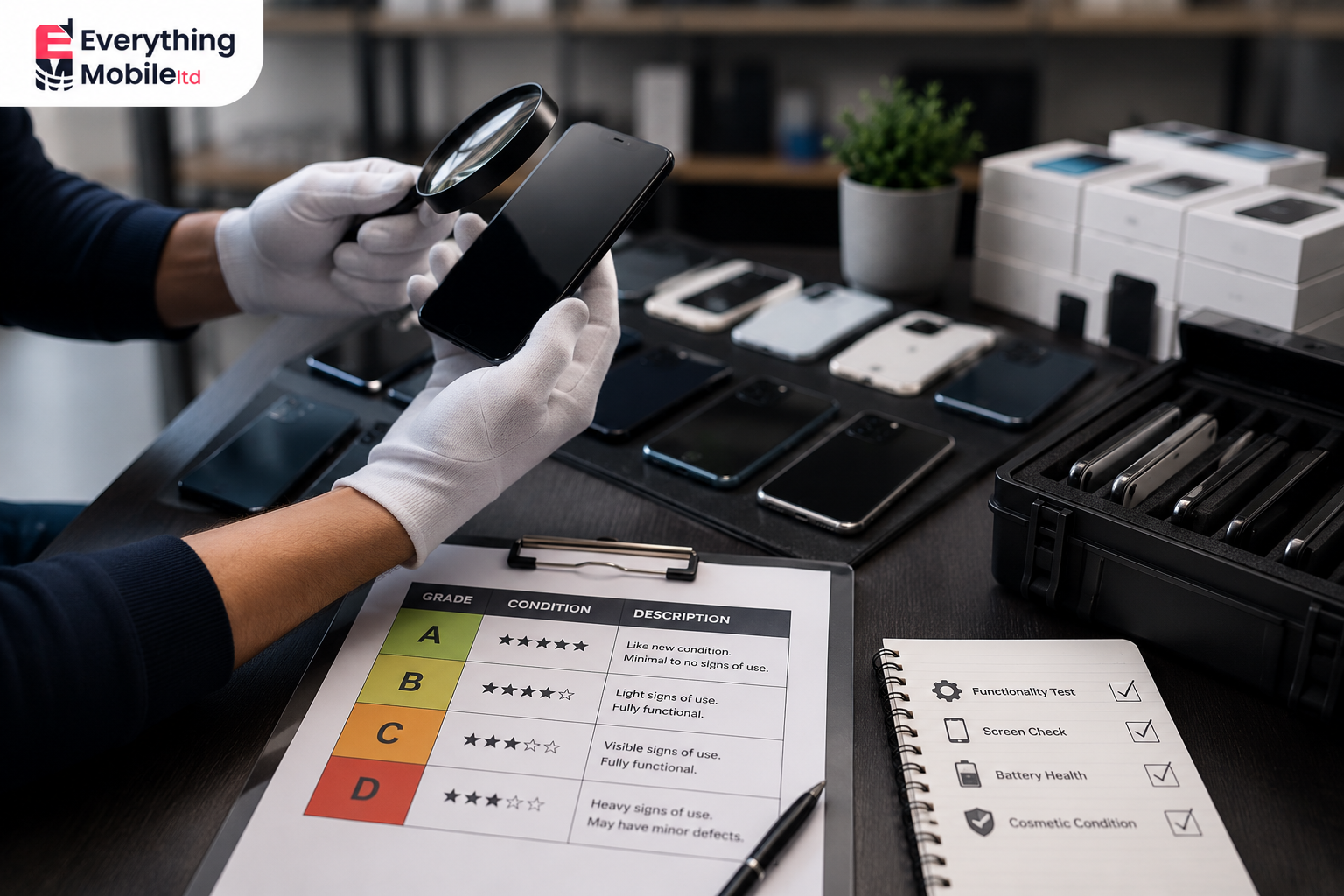
Refurbished and used devices should always come with a transparent grading system typically ranging from pristine, near-flawless condition through to devices with visible cosmetic wear. Ask suppliers exactly what their grading criteria cover: screen condition, battery health percentage, casing wear, and functional testing.
A supplier who cannot explain their grading process in specific terms, or who grades inconsistently between batches, introduces risk into fleet management and increases the likelihood of returns.
Warranty and After-Sales Support
Warranty terms separate serious suppliers from short-term resellers. Look for suppliers offering at least 12 months on refurbished stock, clear processes for faulty units, and a dedicated account contact rather than a generic support inbox. After-sales responsiveness becomes especially important when managing dozens or hundreds of devices across a workforce.
Sustainable Sourcing and Mobile Phone Recycling
Sustainability has moved from a nice-to-have to a genuine procurement criterion, particularly for organisations reporting on ESG commitments. A supplier offering trade-in, buy-back, and certified recycling for retired devices helps businesses reduce e-waste and often recover residual value from old stock.
Supplier Scalability for Growing Businesses
A supplier that works well for 20 devices may not cope with a 200-device rollout. Scalability should be tested early ask about maximum order capacity, how quickly stock can be replenished, and whether pricing structures adjust favourably as order volume grows. Businesses expanding across multiple UK sites need a partner who can maintain consistent grading and pricing regardless of location.
Questions to Ask Before Choosing a Supplier
- What is your average stock turnaround time for bulk orders?
- How do you grade refurbished devices, and can you share sample criteria?
- What warranty terms apply to new versus refurbished stock?
- Can you support phased delivery across multiple business sites?
- What happens to devices we trade in or retire do you offer certified recycling?
- Can pricing scale as our order volumes grow?
Common Mistakes When Selecting a Phone Supplier
- Choosing on price alone without checking stock consistency or warranty terms
- Ignoring device grading detail, leading to mismatched fleet quality
- Overlooking data security processes during device wiping and resale
- Failing to ask about scalability before committing to a long-term contract
- Treating recycling as an afterthought rather than part of the procurement plan
Why a Procurement Consultancy Helps

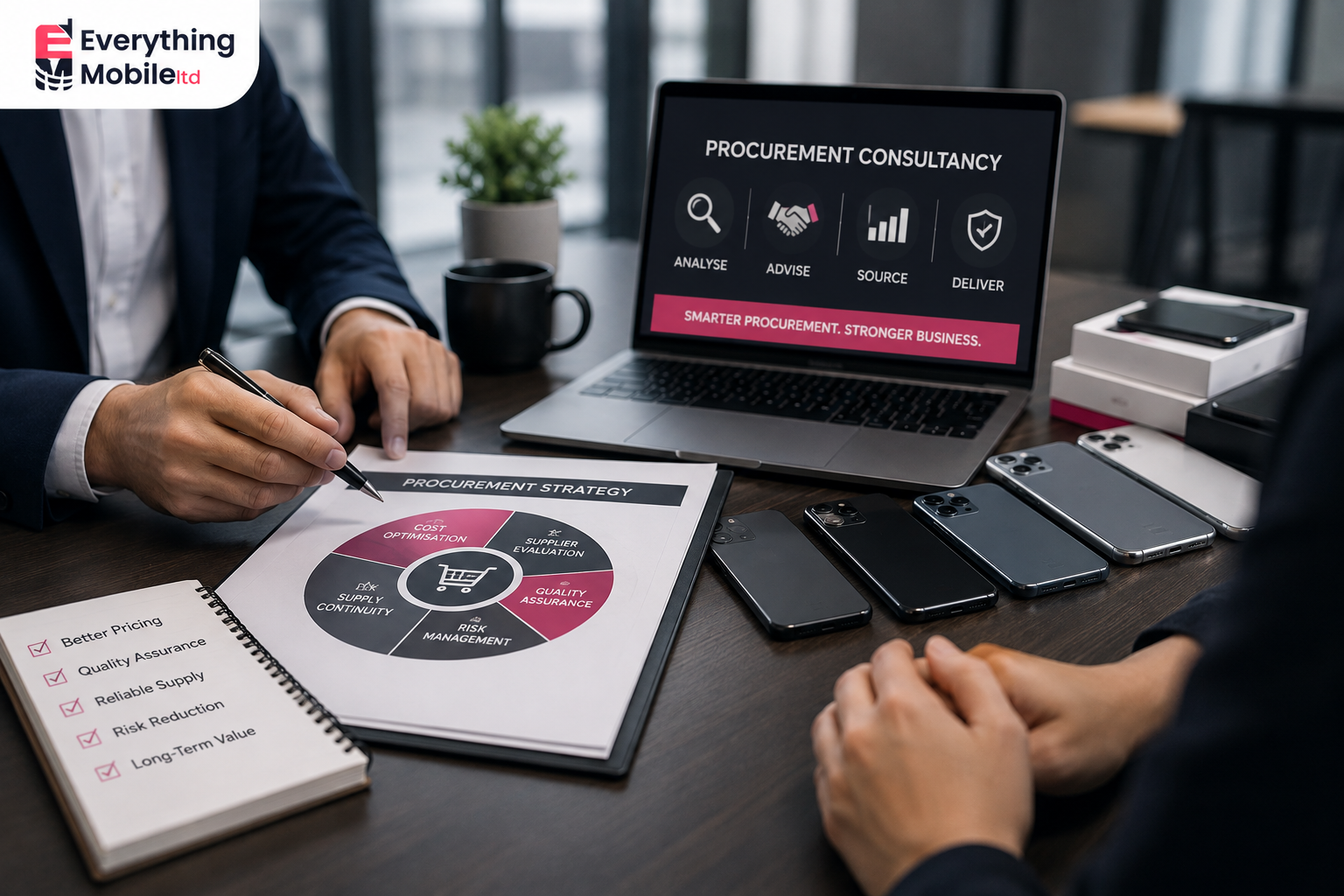
Choosing between multiple suppliers, grading standards, and pricing models is time-consuming for procurement and IT teams already managing broader responsibilities. Working with a specialist mobile phone procurement and recycling consultancy brings direct industry relationships and negotiation experience that most internal teams cannot replicate on their own.
As a mobile phone procurement and recycling consultancy with decades of combined experience working alongside insurance companies, network operators, and retailers, our team has consistently seen that businesses save the most both financially and operationally when procurement, repair strategy, and end-of-life recycling are planned together rather than handled as separate decisions. You can read more about our background and industry experience.
If you’re comparing options, our mobile phone procurement and consultancy services cover sourcing, repairs, and end-of-life recycling under one point of contact. You can also explore our current refurbished mobile phone stock, learn how our mobile phone refurbishment process works, or see how our mobile phone recycling programme supports business sustainability goals. For a direct conversation about your procurement needs, get in touch with our team.
FAQs
Q1: How do I know if a phone supplier is suitable for business bulk orders?
Check whether they publish clear minimum order quantities, offer tiered pricing by volume, and can guarantee consistent stock over repeated orders rather than a single batch.
Q2: Is it better to buy new or refurbished phones for staff devices?
It depends on the role. Client-facing or senior staff often use new devices for brand consistency, while refurbished stock works well for shared-use or operational roles where cost control matters more.
Q3: What warranty should I expect on refurbished business phones?
Most reputable suppliers offer at least 12 months on refurbished devices, though terms vary by grade and should always be confirmed in writing before ordering.
Q4: How does mobile phone recycling benefit a business, not just the environment?
Trading in or recycling retired devices can recover residual value, support ESG reporting, and reduce the security risk of unused devices sitting in storage.
Q5: What’s the biggest mistake businesses make when choosing a phone supplier?
Selecting based on the lowest quoted price without checking stock consistency, grading transparency, or scalability all of which affect the real long-term cost.