
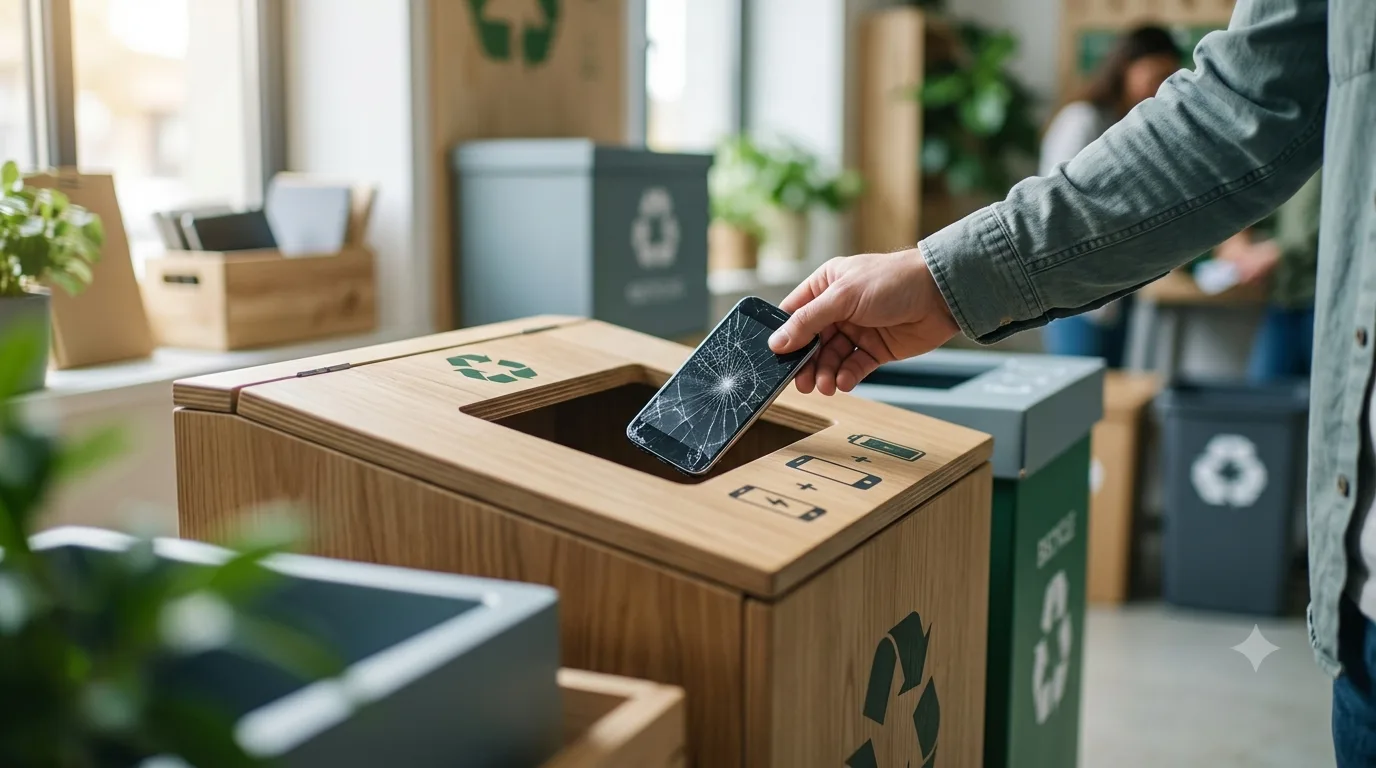
A cracked screen, a swollen battery, a phone that won’t turn on anymore it doesn’t mean the device is worthless. It means it needs the right recycling partner. Millions of damaged handsets sit in drawers every year simply because people don’t know where to take them safely.
Quick answer: Safe damaged mobile phone recycling services are offered by certified e-waste recyclers, manufacturer take-back schemes, and specialist mobile recyclers who provide certified data destruction, secure battery handling, and documented environmental compliance not general waste bins or unverified third-party collectors.
Did You Know? According to unitar.org; unep.org The UN’s Global E-waste Monitor found the world generated 62 million tonnes of e-waste in 2022, yet only about 22% of it was formally collected and recycled leaving billions in recoverable materials like gold, copper, and silver unrecovered. Small IT and telecom equipment, including mobile phones, made up roughly 4.6 million tonnes of that total.
Key Takeaways
- Safe recycling covers data security, environmental compliance, and physical safety not just “getting rid of” the device
- Damaged batteries need specialist handling; never assume standard drop-off boxes are appropriate
- Always ask for certified data destruction proof, especially for business or bulk devices
- Water damage, cracked screens, and dead devices are still recyclable through the right provider
- A transparent recycler will always explain what happens to your device next
To recycle your device safely, start by confirming these credentials before you hand anything over whether it’s one personal phone or a batch of retired company devices.
What “Safe” Damaged Mobile Phone Recycling Actually Means
Not every recycler that accepts old phones handles them responsibly. Safe recycling covers three things at once: protecting your personal data, protecting the environment, and protecting whoever physically handles the device afterward especially when a battery is swollen, cracked, or leaking.
A damaged phone isn’t just scrap. It’s still carrying your accounts, photos, banking apps, and saved passwords, along with lithium components that can catch fire if crushed or stored incorrectly. A trustworthy provider treats both risks seriously, whether you’re a single consumer clearing out a drawer or an IT manager decommissioning fifty company handsets at once. This is the same standard you’d want applied when recycling a phone with a cracked screen, a smashed back panel, or a device that no longer powers on.
How to Identify a Reputable Recycling Provider
Before handing over any device, check for these signs:
- Certified data destruction look for providers who follow recognised standards, ideally with a certificate confirming the wipe or physical destruction of storage.
- Transparent process they explain what happens after collection: refurbishment, component recovery, or certified disposal.
- Environmental compliance registered under e-waste regulations such as the UK’s WEEE Directive, with proper handling of hazardous materials.
- Secure logistics tracked collection, tamper-evident packaging, and a chain of custody for business or bulk devices.
- Clear scope on damage confirmation they accept cracked screens, water-damaged units, and devices with damaged batteries, not just working phones.
If a provider can’t answer basic questions about where the device physically goes, that’s a signal to look elsewhere. This is exactly the gap that leads people to ask why recycling mobile phones matters in the first place the process only delivers its benefits when it’s done properly.
Certified Data Destruction: The Non-Negotiable Step
Even a phone with a shattered screen can sometimes still be accessed through data ports or by removing the storage chip. That’s why certified data destruction matters as much for a damaged device as a working one. Reputable recyclers either perform a certified software wipe when the device still boots, or physically destroy the storage media when it doesn’t and they issue proof of that action.
Businesses and schools in particular should ask for a data destruction certificate for every batch of devices, not just a verbal assurance. This single document is often what separates a compliant recycling process from one that creates a data breach risk months later.
Recycling a Phone With a Damaged Battery
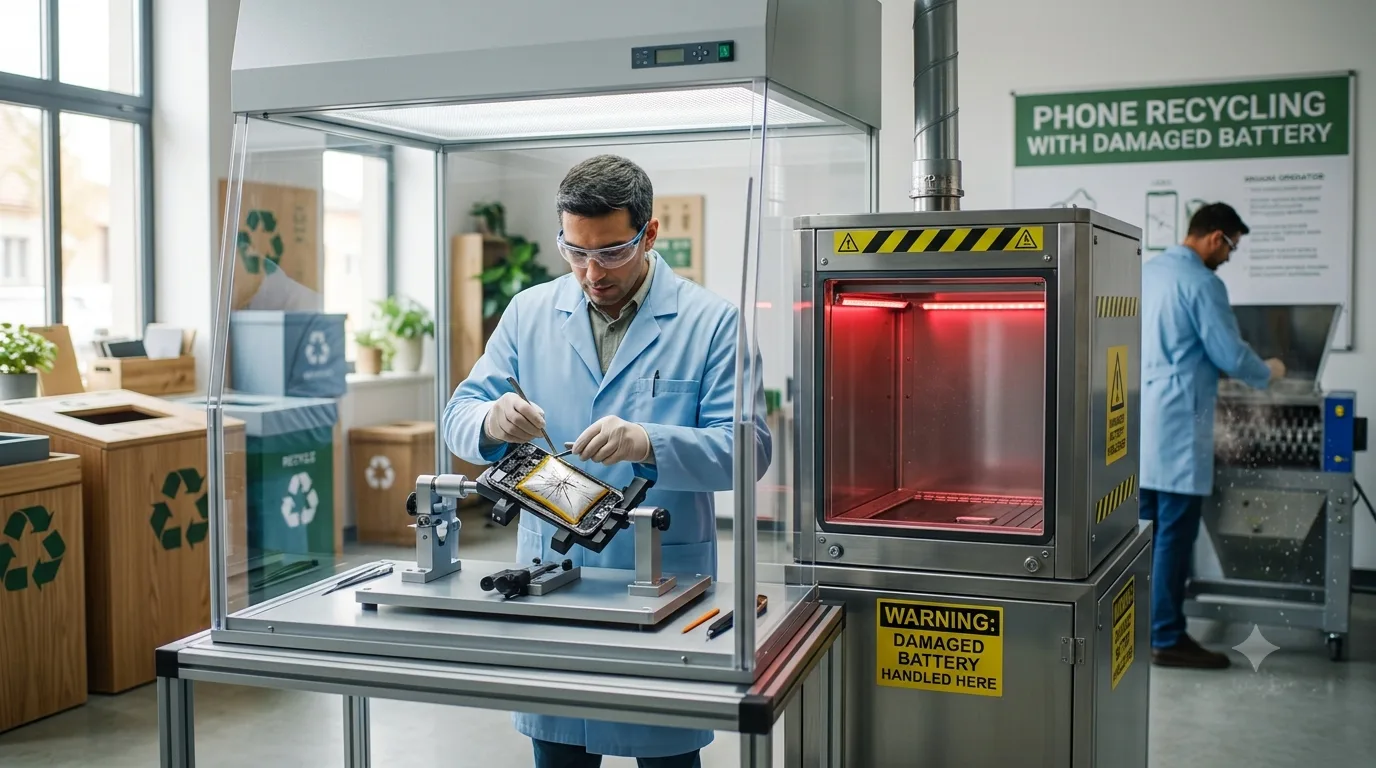
Damaged batteries are the single biggest safety concern in mobile phone recycling. A swollen, punctured, or overheating battery can ignite if it’s dropped in a standard collection box or crushed during transport. So where can you recycle a phone that has a damaged battery safely?
- Look for recyclers who explicitly list battery-damaged devices as accepted, not excluded
- Ask how the device will be transported damaged-battery units usually need separate, fire-resistant packaging
- Avoid posting a phone with a visibly swollen or leaking battery through standard mail unless the provider gives specific packaging instructions
- Prefer providers offering drop-off or courier collection over unsupervised public bins for these devices
Device Collection Options Compared
| Collection Method | Best For | Data Security | Handles Damaged Batteries |
| Certified recycler pickup/courier | Businesses, bulk devices, damaged batteries | High – documented chain of custody | Yes, with proper packaging |
| In-store drop-off | Individuals with a few devices | Medium – depends on provider | Sometimes, ask first |
| Manufacturer take-back scheme | Single consumer devices under warranty ecosystems | High for supported models | Limited, varies by brand |
| Public recycling bin | Basic e-waste, low-risk items | Low – no verification | Not recommended |
A second comparison worth making is between providers themselves:
| Signal | Reputable Recycler | Risky Collector |
| Data destruction | Certified, documented | No proof offered |
| Battery handling | Trained staff, safe packaging | No specific process |
| Compliance | Registered under e-waste law | No registration shown |
| Transparency | Explains next steps for your device | Vague or evasive |
Common Mistakes People Make
- Tossing damaged phones in general waste this is illegal in many regions and releases toxic materials into landfill.
- Skipping data removal because “the screen’s broken anyway” data can often still be extracted from a cracked or dead device.
- Choosing the cheapest or fastest option without checking credentials some collectors resell devices for parts without safely handling batteries or wiping data.
- Assuming water-damaged phones can’t be recycled most certified recyclers accept them; they just require different handling.
- Not asking for confirmation a proper recycler should be able to tell you what happened to your device.
Why It’s Worth Choosing a Trusted Partner
Beyond the environmental upside recovering copper, gold, and rare materials instead of mining new ones working with a certified provider protects you from liability. For businesses and schools, that means avoiding data protection penalties. For individuals, it means peace of mind that a swollen battery won’t cause harm in transit, and that old accounts and photos aren’t sitting on a chip in someone else’s hands. Exploring the benefits of recycling old phones makes the case clearer once you see how much material and value gets recovered when the process is done right.
If your organisation manages recurring device turnover, it’s worth understanding the data wiping and refurbishment process recyclers use, so devices that can be reused don’t end up destroyed unnecessarily, and those that can’t are handled safely.
Ready to Recycle Your Damaged Phone the Right Way?
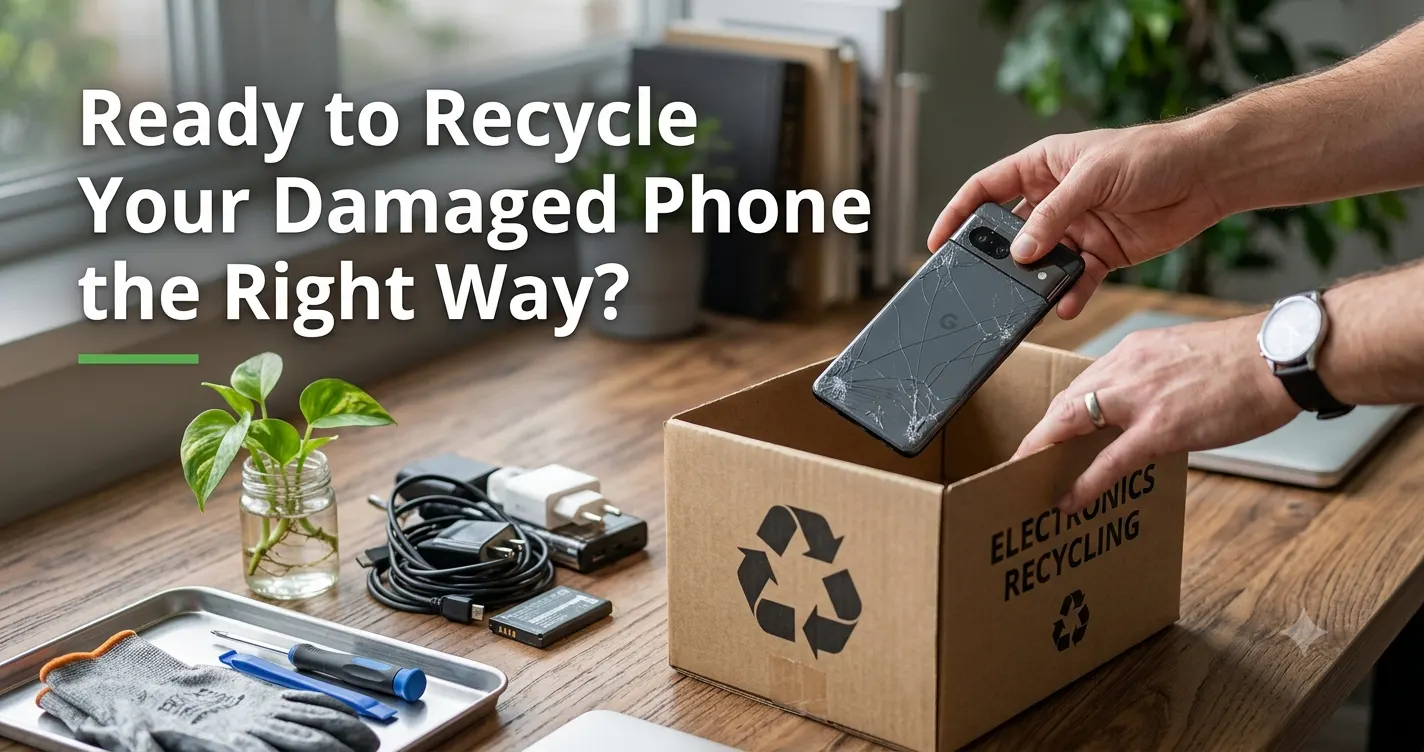
Whether it’s one handset with a cracked screen or a batch of retired company devices with damaged batteries, the safest option is always a provider that can show you certified data destruction and proper environmental compliance before you hand anything over. Get in touch with a trusted mobile phone recycling service to arrange collection, ask about their process for damaged devices, and recycle your phone with confidence that both your data and the planet are taken care of.
Frequently Asked Questions
Q1: Can a phone with a completely smashed screen still be recycled?
Yes. A broken screen doesn’t stop a recycler from extracting valuable materials or destroying stored data. It’s one of the most common conditions recyclers handle.
Q2: Is it safe to post a phone with a swollen battery through the mail?
Not without specific guidance from the recycler. Swollen batteries are a fire risk in transit, so ask for packaging instructions or use an in-person drop-off instead.
Q3: Do I need to factory reset a phone before recycling it, even if it’s damaged?
If the device still turns on, resetting it first is good practice. If it doesn’t, tell the recycler so they can confirm how they’ll destroy the data instead.
Q4: Are tablets accepted alongside damaged mobile phones for recycling?
Most providers that handle damaged mobile phone and tablet device recycling accept both, since the components and data risks are similar.
Q5: What happens to a phone after it’s recycled?
Depending on its condition, it’s either refurbished and resold, stripped for working parts, or broken down so raw materials like copper, gold, and rare earth elements can be recovered.